Client
Team
FREAKS architecture: architect
Paludes: landscape architect
Program
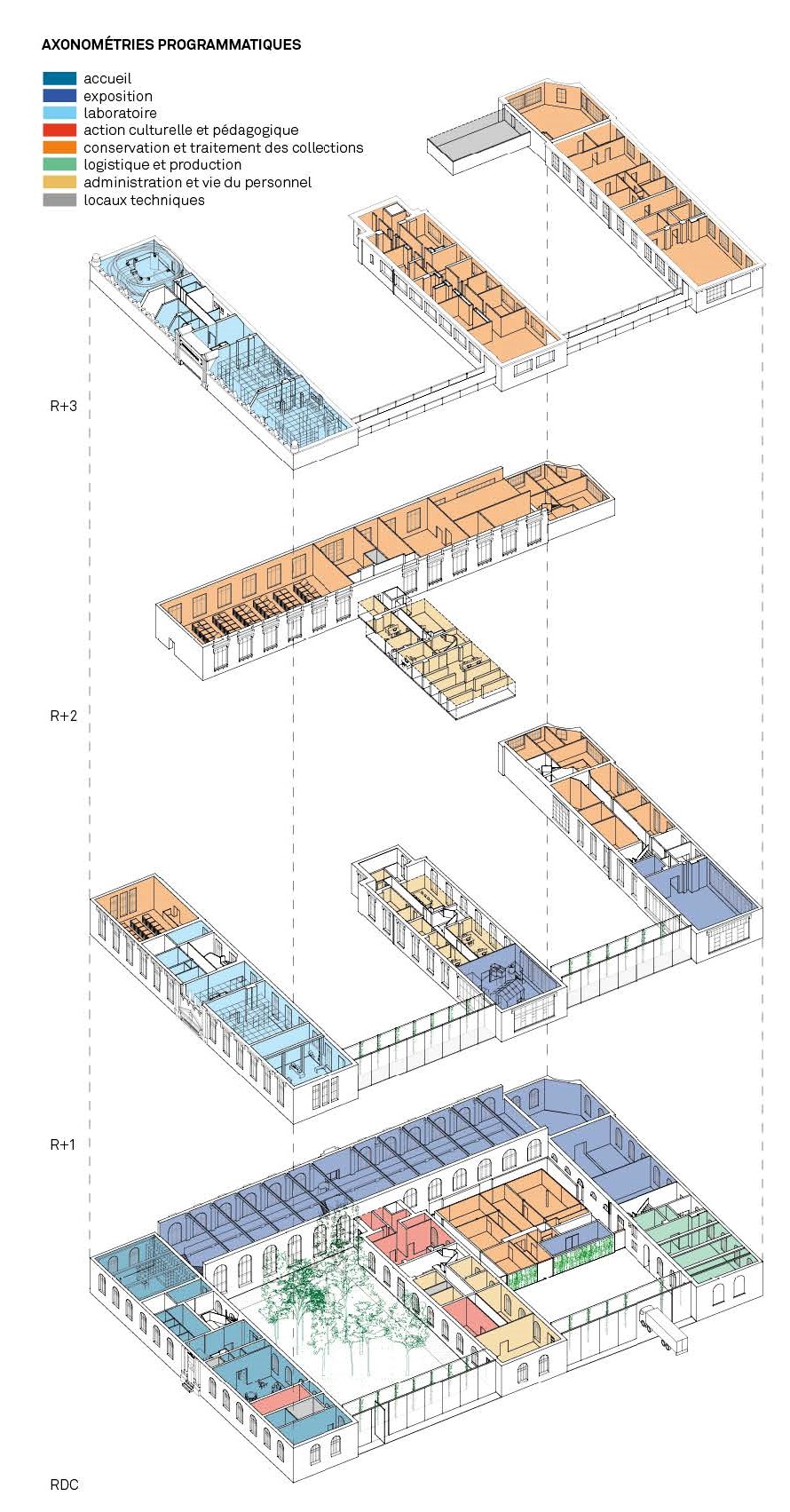
Building surface: 5 682 m² / exhibition surface: 1 500 m²
Construction budget: 15 M€ / scenographic budget: 1.5 M€
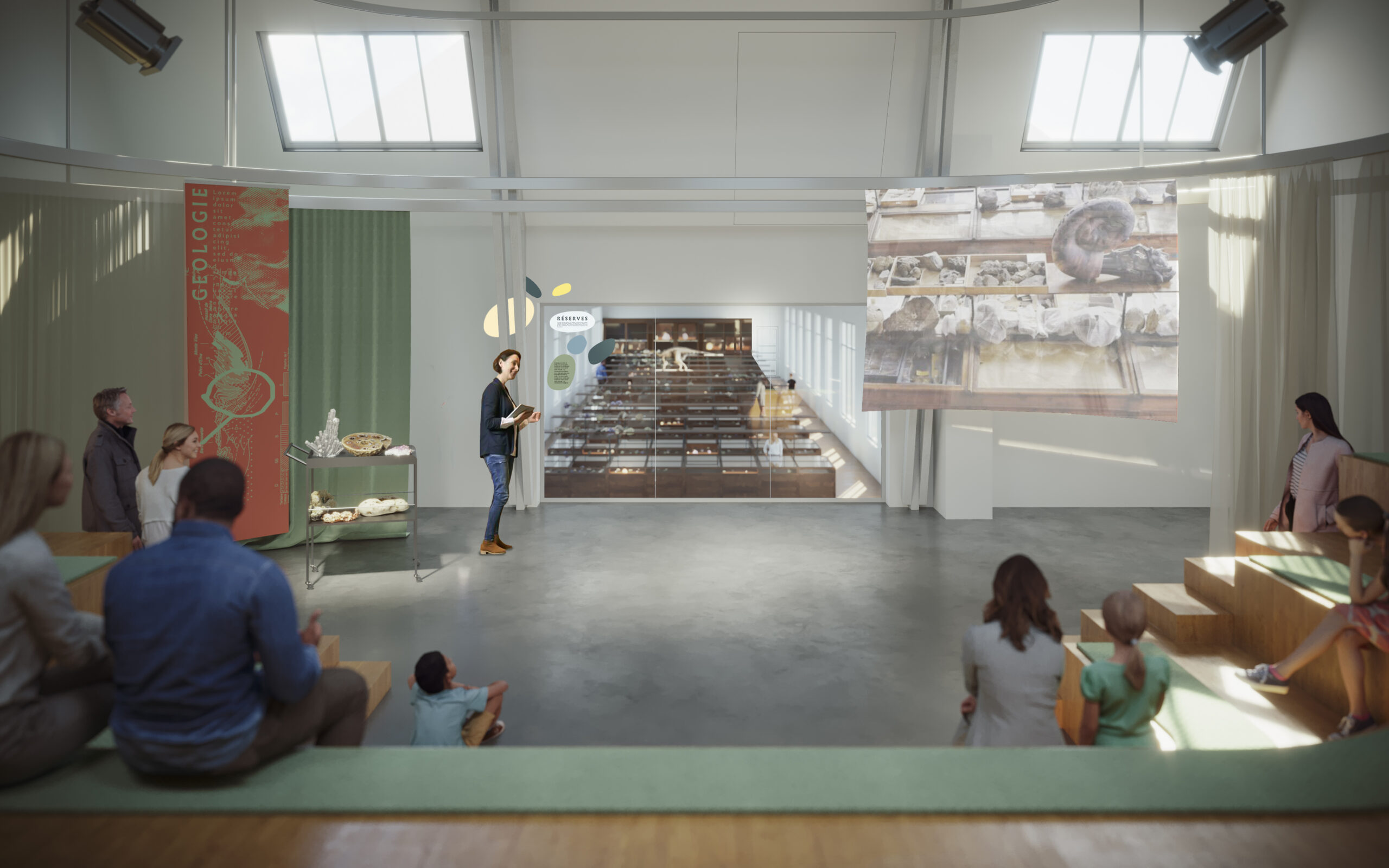
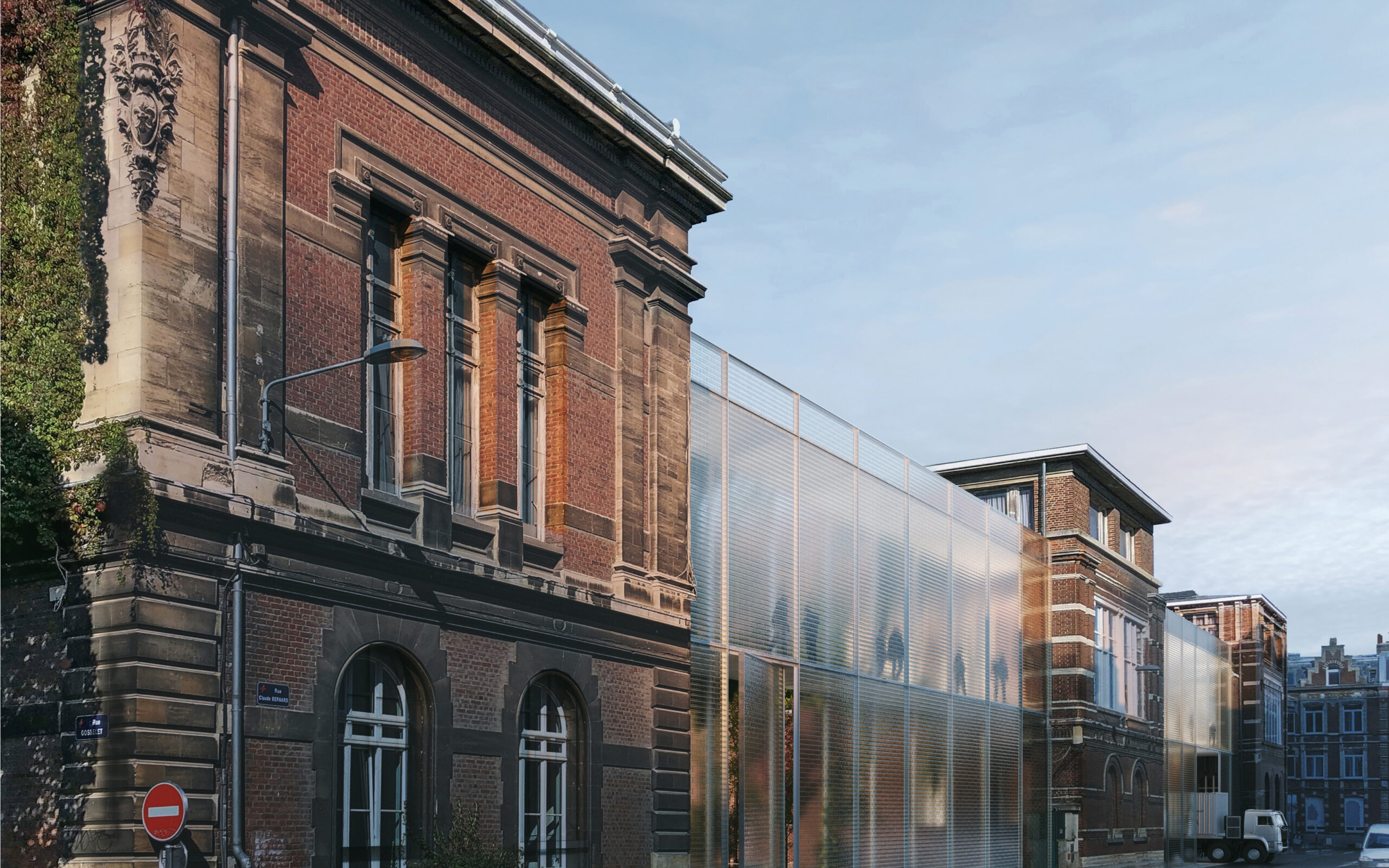
Renovation of the Natural History Museum / new permanent and temporary exhibition spaces / educational workshops / administrative spaces / collection storage
équipe ducks
Missions
Scenographic design (spaces and operation) / Exhibition design / design and technical development of audiovisual systems / multimedia systems / hands-on displays / museographic displays / exhibition display cases
Project coordination and management
Scenography
The scenographic project supports the transformation of a bicentennial institution into a museum of science and society—engaged, accessible, and deeply rooted in its territory. It brings into dialogue the museum’s four founding collections—zoology, geology, science and technology, and extra-European ethnography—in order to question humanity’s place within the natural and cultural world.
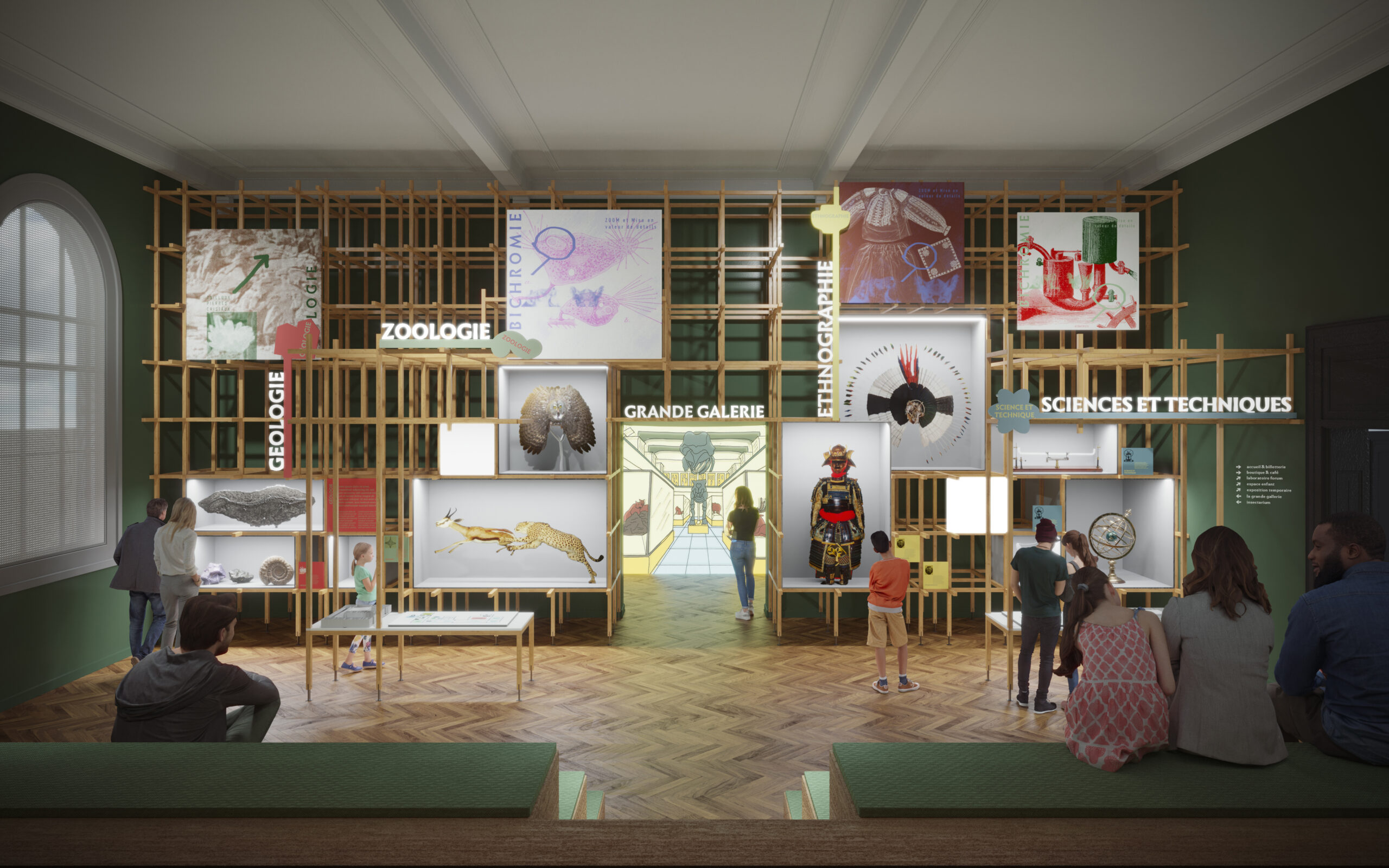
Muséo Mod’emploi – Finding one’s way, understanding, locating oneself. The visit begins with a welcoming and unifying introductory space. A true “table of contents” for the museum, it presents its identity, values, and collections through a large wooden scenographic wall juxtaposing iconic objects from zoology, geology, science and technology, and ethnography. A tiered seating area in rammed earth and wood welcomes visitors and mediation activities, laying the foundations for a sustainable, human-scale museographic identity.
The Grand Gallery – Heritage, memory, and cross perspectives. Within this spectacular historic volume, the scenography is discreetly integrated into the existing historical layers. A new layer of graphic, lighting, and digital interpretation brings natural history and anthropological collections into dialogue, revealing the evolution of knowledge and representations of the living world.
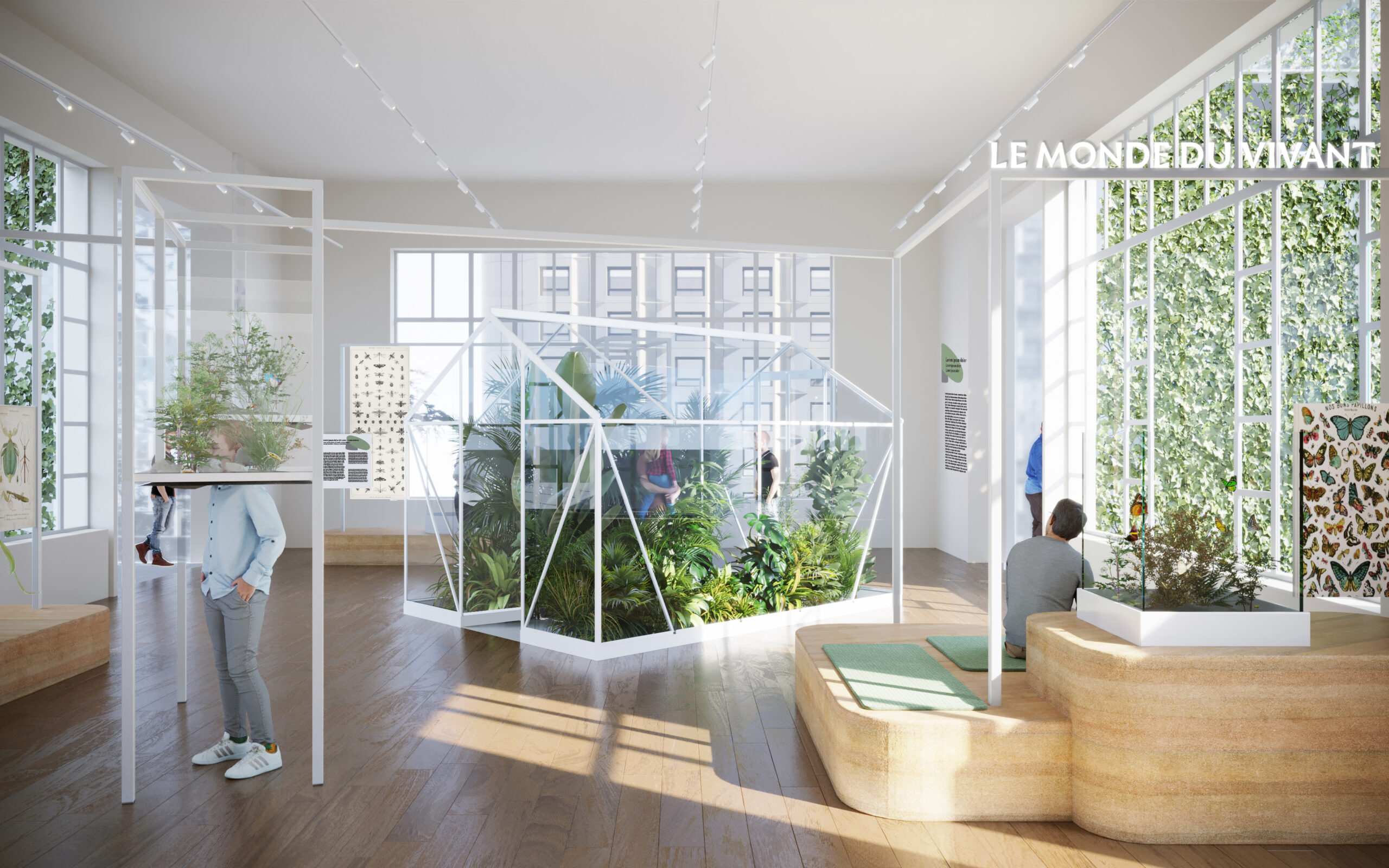
The Living World – Observing and understanding life. Open onto the garden, this pathway develops a sensory and tangible approach to zoology and the life sciences. It invites visitors to observe species, their behaviours, and their environments, while questioning our contemporary relationship with nature.
Missions
Scenographic design (spaces and operation) / Exhibition design / design and technical development of audiovisual systems / multimedia systems / hands-on displays / museographic displays / exhibition display cases
Project coordination and management